
From finance to farming
Arun Srinivas made a bold shift in 2020 when he left his finance career. He sold his shares and gold, then invested everything into his family farm in Karnataka, southern India. His goal was simple. He wanted work that supports both his mental well being and financial stability.
The farm earlier focused on crops like coconuts and mangoes. However, Srinivas decided to try something different, dragon fruit.
Why dragon fruit stood out
He spent time researching before making the switch. His findings showed that dragon fruit could offer strong returns with lower risk. The crop uses less water and faces fewer disease issues compared to many traditional fruits.
He treated the decision like an investment. Srinivas visited around 80 to 100 farms. He spoke with other farmers to understand profits, risks, and challenges. After gathering data, he made his own analysis and moved forward.
How dragon fruit is grown
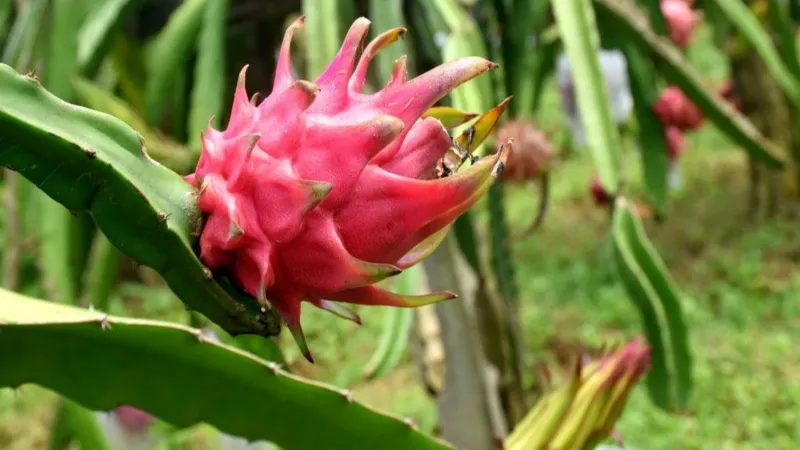
Dragon fruit is not a typical crop. It is a climbing cactus that grows on support structures. Farmers usually grow it on concrete pillars with a circular frame at the top. The vines spread and hang down, allowing the fruit to grow properly.
The fruit originally comes from Central America. Today, Vietnam leads global production. India is working to expand its own production and compete in this market.
Growth of the industry in India
Dragon fruit first appeared in India around 2009. At that time, farmers had limited knowledge about how to grow it. Research efforts began to grow around 2013 and 2014, led by experts at the Indian Institute of Horticultural Research in Bengaluru.
The crop gained real momentum after 2021. Media coverage played a big role in encouraging farmers to adopt it. Many farmers saw the income potential and followed the trend.
According to experts, the crop offers more stable pricing compared to many traditional fruits. It also provides a steady income since farmers can harvest it over several months.
Income potential for farmers
Dragon fruit has a longer harvesting period compared to crops like mango. Farmers can harvest small amounts every month for about six months.
Experts estimate that a single acre can produce up to 15 tonnes annually. This gives farming families a more consistent income stream, which helps reduce financial pressure.