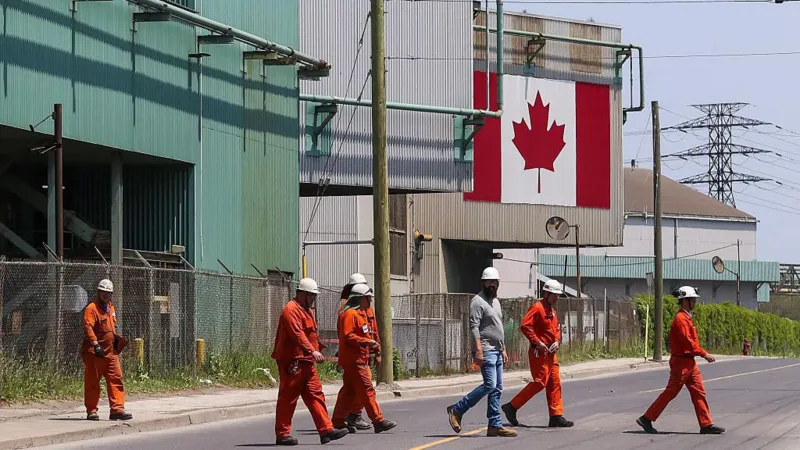
Prime Minister Mark Carney has promised to rebuild Canada’s economy, but rising prices, a technical recession, and affordability challenges continue to put pressure on households.
Canada’s economy is facing a difficult period despite government efforts to restore growth and attract new investment. Prime Minister Mark Carney has pledged to make Canada the strongest economy in the G7, but many Canadians are still struggling with high living costs, housing affordability issues, and an uncertain job market.
Canada Slips Into a Technical Recession
Canada officially entered a technical recession after the economy contracted for two consecutive quarters in late 2025 and early 2026. Although the decline has been relatively small, economists say it reflects an economy that remains weak and vulnerable.
The International Monetary Fund (IMF) forecasts Canada’s economy will grow by 1.6% in 2026. While this figure trails the United States, it still places Canada ahead of several European members of the G7.
The Organisation for Economic Co-operation and Development (OECD) expects the country’s economic growth to improve slightly to 1.7% in 2027 as global trade conditions stabilize and supply chains recover.
Government officials argue that Canada is responding quickly to economic challenges by promoting exports, creating jobs, and investing in projects that improve productivity.
Cost of Living Remains the Biggest Concern
For many Canadians, the rising cost of living has become the country’s most pressing issue.
A recent survey by the Angus Reid Institute found that 61% of Canadians consider living costs their top concern. Housing affordability, crime, and trade tensions with the United States followed behind.
Inflation increased to 3.2% in May, up from 2.8% in April. Higher energy prices, especially gasoline costs linked to tensions in the Middle East and the Iran conflict, pushed prices upward.
Although inflation is much lower than the post-pandemic highs experienced in recent years, many families continue to feel financial pressure as everyday expenses remain elevated.
Housing and Employment Challenges Continue
Younger Canadians face growing difficulties entering the housing market. Rising property prices and higher borrowing costs have made home ownership increasingly difficult.
At the same time, some sectors of the economy continue to feel the effects of tariffs and slowing business activity, limiting employment opportunities for many workers.
Economists believe Canada can avoid a long and severe recession, but they caution that the economy still lacks strong momentum.
Outlook for Canada’s Economy
Canada’s economic outlook remains mixed. Growth is expected to return gradually, but inflation, affordability concerns, and global uncertainty continue to weigh on consumers and businesses.
Prime Minister Mark Carney’s economic strategy aims to attract investment and strengthen long-term growth. However, many Canadians will likely continue to face financial challenges until wages, employment opportunities, and living costs improve.