
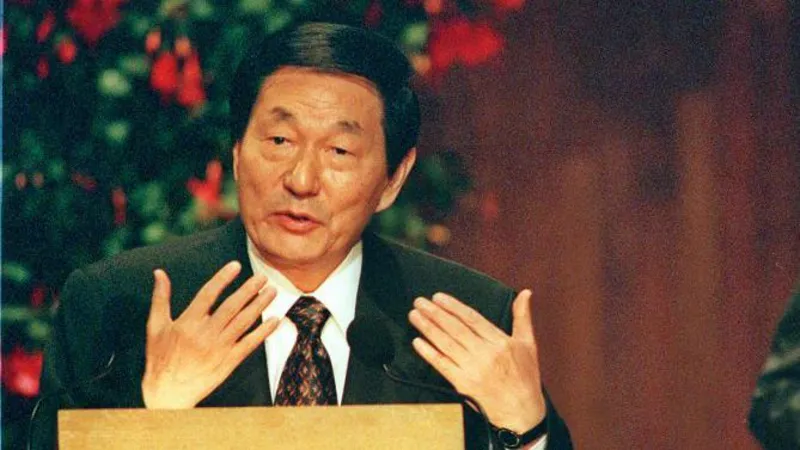
At the age of 97, former Chinese Premier Zhu Rongji passed away. He led China’s entry into international commerce and established the groundwork for its rapid expansion.
From 1998 to 2003, he held the nation’s second-highest position and was instrumental in gaining China’s membership in the World Trade Organization, opening Chinese manufacturers to the global market, and attracting foreign investment.
One of the most significant economic reformers, he encouraged property ownership, dissolved or privatized failed state businesses, and transferred municipal tax authority to the federal government.
He was a strong and practical leader who produced double-digit growth and was rarely reluctant to voice his opinions, according to many in China.
He declared in 1998 that China was dealing with “many potential crises that could erupt at any time.”In many respects, the general public is unhappy with us. In particular, there is the wealth gap, governmental corruption, and the despotic behavior of certain local leaders.
He described the Yangtze River’s flood dikes and dams as “flimsy and porous as tofu dregs” and called renegade bankers “half-wits”.
China started to change from being a Communist outsider to an industrial superpower under his leadership, which helped stabilize the economy and combat corruption.
Zhu Rongji's Political Rise in China
However, he was criticized since such changes also resulted in 30 million layoffs over a five-year period and increased inequality due to the massive growth.
Before entering the civil service, he obtained a degree in electrical engineering. He was born in the central province of Hunan in 1928.
He became a member of the Communist Party in 1949, but he was expelled twice: once during the Cultural Revolution and once after calling Mao Zedong’s economic policies “irrational” and calling him a “rightist.”
Following Mao’s passing, Zhu was reintegrated into the group and by 1991 was in command of China’s economy as vice-premier.
Seven years later, he became premier.