Rubio Draws Applause With Clear Foreign Policy Vision
At the Munich Security Conference, Secretary of State Marco Rubio and Representative Alexandria Ocasio Cortez both stepped onto an international stage as potential 2028 presidential contenders. While neither has formally announced a run, political observers already see them as rising figures in their parties.
Rubio used his speech to outline President Donald Trump’s foreign policy approach. He stressed strong military power, firm trade policies, energy independence and economic growth. He also made it clear that the United States should lead from a position of strength.
In addition, Rubio defended Trump’s decision to pull back from global agreements such as the Paris climate accord and institutions like the United Nations and the World Health Organization. He argued that national sovereignty must come first.
Rubio also criticized European allies. He warned against what he described as overreliance on welfare systems, weak defense spending and climate driven policies that hurt industry. At the same time, he struck a unifying tone. He reminded the audience that the United States and Europe share deep cultural and historical ties.
Some commentators compared Rubio’s remarks to the style of former President Ronald Reagan. Supporters say Rubio clearly explained the principles behind Trump’s policies and presented them in a focused way.
Ocasio Cortez Faces Tough Questions on Global Issues
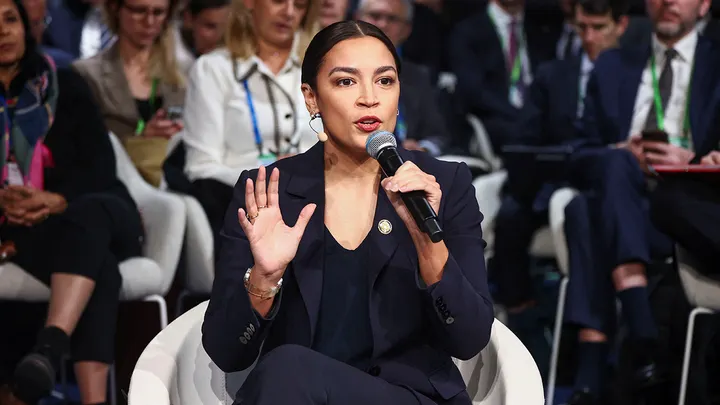
Meanwhile, Ocasio Cortez appeared at a separate forum linked to the Munich conference. Her performance drew mixed reactions, especially when she was asked about Taiwan.
When questioned about whether the United States should defend Taiwan if China attempted to seize it, she hesitated. Critics pointed to her pauses and unclear phrasing as signs of limited foreign policy experience. Even outlets that often align with her political views described the moment as shaky.
She later said the United States should avoid such confrontations altogether. However, some analysts argued that the question itself reflects a long standing and central issue in US foreign policy.
Ocasio Cortez also stumbled over terminology at one point, confusing the trans Atlantic partnership with the Trans Pacific Partnership. In addition, she challenged Rubio’s reference to Spanish roots in American cowboy culture.
Throughout her remarks, she criticized Trump’s foreign policy. She claimed his approach risks pulling the United States away from global leadership and empowering authoritarian leaders abroad.
2028 Speculation Begins to Build
Although the 2028 election remains years away, appearances like these shape early impressions. Rubio presented himself as steady and policy focused. Ocasio Cortez, by contrast, faced questions about her readiness on global affairs.
As both figures continue to build their national profiles, moments on the world stage could play a major role in shaping future campaigns.