A different China compared to 2017
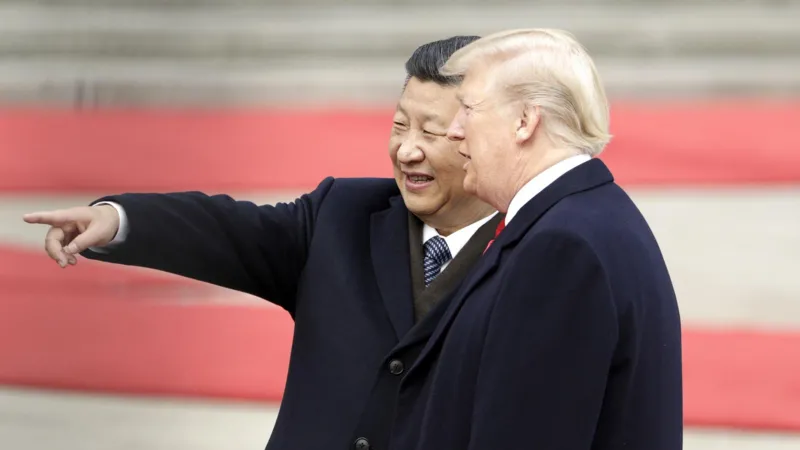
Donald Trump is visiting Beijing again after his 2017 trip, when he was welcomed with rare state hospitality, including a formal dinner inside the Forbidden City. This time, the setting is even more politically charged as China presents itself as a stronger global power under Xi Jinping.
Chinese officials are preparing another high level reception, which may include access to Zhongnanhai, the leadership compound where top decision makers live and work. But the tone of the visit is expected to be shaped less by ceremony and more by serious geopolitical issues.
China’s economic and tech transformation
Over the past decade, China has expanded its industrial and technological base at a rapid pace. Cities like Chongqing have transformed from traditional industrial centers into modern tech driven urban economies, supported by strong state investment.
Growing rivalry between Washington and Beijing
Experts say the balance of power has shifted since 2017. China is no longer trying to simply match the United States, but is widely seen as a near equal competitor on the global stage.
Analysts argue that Washington now views Beijing as one of its most serious strategic challengers in modern history. This shift reflects changes in trade strength, technological progress, and global influence.
Trade tensions and global flashpoints
The agenda for talks between Trump and Xi is expected to cover several sensitive issues. These include trade disputes, advanced technology competition, Taiwan, and rising tensions linked to Iran.
Trump’s role in Chinese public perception
Public opinion in China toward Trump remains mixed. In parts of China, especially urban centers like Chongqing, some people view his “America First” approach as disruptive to global cooperation. Others see it as part of wider rivalry between the two countries.