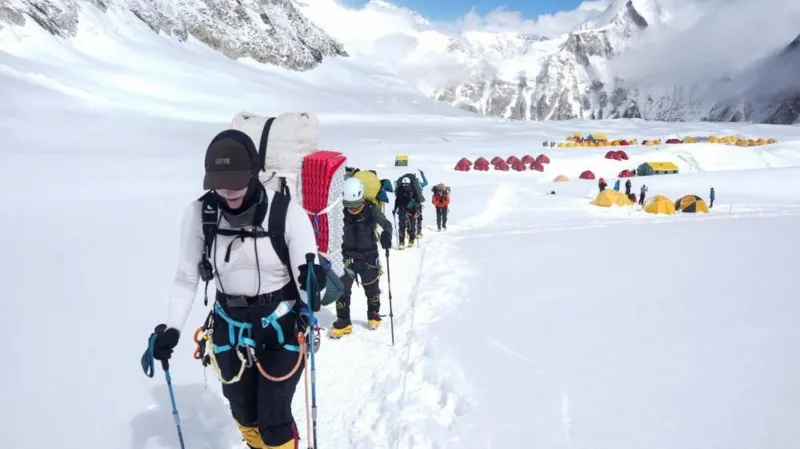
Route Reopens After Ice Blockage on Everest
An elite Nepali climbing team has restored access to the summit of Mount Everest after a large mass of unstable ice blocked the main climbing path.
The team fixed ropes and installed ladders early on Wednesday. This allowed other climbers to continue their ascent using the secured route.
The ice formation had prevented movement for weeks. It forced many climbers to stay at Everest Base Camp while waiting for conditions to improve.
Heavy Crowds Raise Safety Concerns
This year, nearly 500 foreign climbers have permits to attempt the summit. Most are also supported by Nepali guides, which brings the total number of people on the mountain to around 1,000 during the peak period.
Experts warn that such numbers can create congestion on narrow climbing sections. Climbers may face delays in critical areas, especially near the summit push.
Experienced climber Purnima Shrestha, who is attempting her sixth Everest summit, noted that delays force many climbers to attempt the peak in a short time window, increasing pressure on the route.
Short Climbing Window Adds Pressure
The main climbing season usually runs from late April to the end of May. This year, progress was slowed by a large unstable ice formation known as a serac.
Because of the delay, the safe climbing window has become shorter than usual. Climbers now have limited time to reach higher camps and attempt the summit.
Weather Interruptions and Ongoing Risks
After the route was cleared, rope fixing teams attempted to extend the path from higher camps toward the summit. However, bad weather disrupted progress.
Mountain guides working on the route said that limited time and unstable conditions can increase risk, especially when many climbers move together in a short period.
Another climber, Mingma G Sherpa, warned that heavy movement on a narrow window could lead to serious bottlenecks and safety issues.