
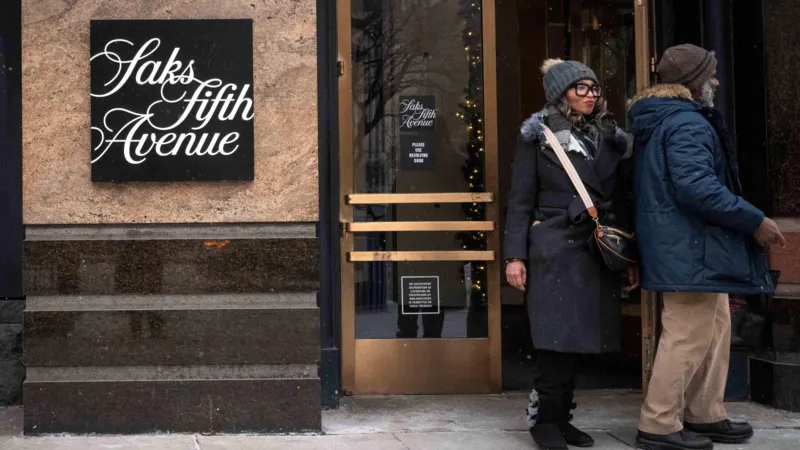
Luxury shoppers walking through Saks Fifth Avenue’s flagship store in Midtown Manhattan still see designer handbags and polished displays. On the surface, everything looks familiar. Behind the scenes, however, the retailer has been struggling to survive.
In early January, longtime customer Penelope Nam Stephen visited Saks in New York after failing to find her usual Diptyque fragrance at the Boston store. What she heard at the counter was worrying. Nearly everything was out of stock, including candles and diffusers. For her, this was more than a one time issue. It was a sign that something deeper was wrong.
That concern is now confirmed.
Saks Global, the parent company of Saks Fifth Avenue, Neiman Marcus, and Bergdorf Goodman, has filed for Chapter 11 bankruptcy protection. The move follows months of financial pressure, unpaid bills, and growing tension with suppliers.
How Saks Reached This Point
Saks Global was formed after Saks Fifth Avenue acquired Neiman Marcus in 2024. Executives promoted the deal as a way to cut costs and build a stronger luxury retail group. The acquisition cost around two point seven billion dollars and was funded largely through debt.
The benefits never arrived.
Even before the merger, Saks was under pressure from declining in store sales and a shift toward online shopping. By early 2023, the company was already reporting double digit drops in quarterly revenue.
After the acquisition, the financial strain intensified. Saks took on more than two billion dollars in new debt and soon missed a one hundred million dollar interest payment due in late December. That missed payment triggered the bankruptcy filing.
Vendors Stop Shipping as Payments Stall
One of the biggest problems facing Saks has been its relationship with vendors. Brands that supply clothing, accessories, and beauty products have complained of delayed payments for months.
Some suppliers continued shipping goods despite the delays, worried that cutting ties would damage long term business. Others eventually stopped.
In November, Hilldun, a finance firm that backs orders for more than one hundred thirty brands working with Saks, announced it would no longer approve new orders. Its leadership said the decision was unavoidable.
Several vendors have confirmed they are still owed thousands of dollars. One supplier said he is waiting on more than twenty thousand dollars in late payments, along with over thirty five thousand dollars in unfulfilled orders that have been frozen since October.
Shoppers Feel the Impact
Customers are now noticing the fallout. Inventory shortages are common, both online and in stores. Some shoppers have reported canceled orders after checkout.
Richard Browne, a longtime Saks customer from North Carolina, ordered a discounted pair of jeans online in early January. The next day, he received an email saying the item was sold out and his order had been canceled. After years of loyalty, he says he is now less likely to shop at Saks again.
Leadership Changes Add to Uncertainty
The instability has reached the executive level. Former chief executive Marc Metrick resigned abruptly in early January. He was replaced by Richard Baker, the executive chairman who led the Neiman Marcus deal. Shortly after, the company announced Baker would also step down. Geoffroy van Raemdonck, former head of Neiman Marcus, is expected to take over.
Retail analysts say the frequent leadership changes have only added to uncertainty.
Mark Cohen, former head of retail studies at Columbia Business School, described the situation as deeply flawed. He argues that Saks leadership focused too heavily on financial deals instead of fixing core business issues, including vendor trust and inventory flow.
What Happens Next for Saks
As part of the bankruptcy process, Saks Global has secured one point seven five billion dollars in financing from investors. The company says this will allow stores to remain open during restructuring.
Still, doubts remain. Vendors are cautious, customers are frustrated, and analysts question whether the brand can rebuild after years of missteps and mounting debt.
For now, Saks Fifth Avenue continues operating. Whether it can restore confidence and reclaim its place in luxury retail is still an open question.