
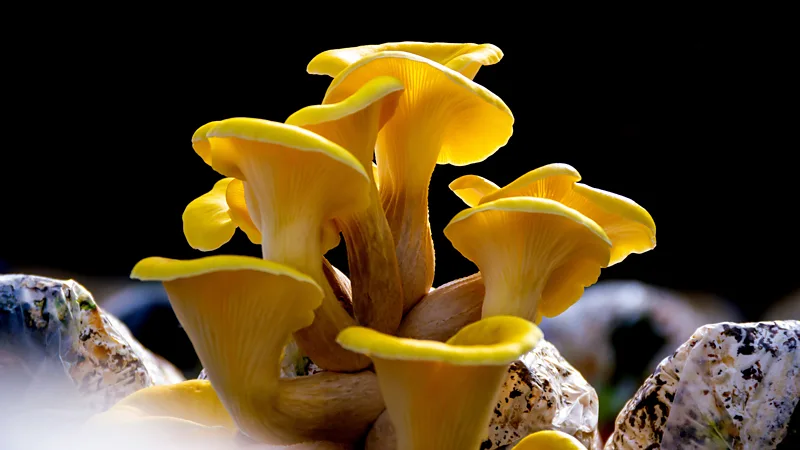
The golden oyster mushroom, Pleurotus Citrinopileatus, is a highly invasive, and dangerous fungus that has spread through North American forest, which poses a threat to the native fungi. This mushroom, originally from Asia was brought to the U.S. as a crop but quickly escaped. The bright yellow cap and the massive amount of spores it produces allow this mushroom to compete with local species.
Scientists warn that golden oysters have a significant impact on fungal diversity. The trees infected with this mushroom have half the number of native fungi compared to uninfected ones, and that could affect forest ecosystems for a long time.
Why this mushroom is so dangerous
The golden oyster mushroom grows mainly on hardwood trees that are dead or dying. They break down the wood fibers in an unusually rapid rate. They are carnivorous and feed on nematodeworms, unlike most other fungi. The mycelium remains hidden for the majority of the year, but they produce fruiting body in spring. The clusters release millions of microscopic microspores, which makes it extremely hard to contain.
The rapid spread of the mushrooms could affect small animals, seedlings and the carbon emission in forest.
Protecting Native Fungi
Mycologists and mushroom enthusiasts are cloning native species in controlled environments to help preserve them. Volunteers learn how to clone mushroom species such as grey oysters at events like the All Things Fungi Festival, in the UK. This helps maintain biodiversity.
Andy Knott is a Dorset mushroom farmer who highlights the importance this work. Many people grow non-native species around the globe, but very few focus on conserving local fungi. He says that by acting now, we can save species at risk of extinction.
Global Spread of the Golden Oyster
Golden oyster mushrooms have been found in over 25 U.S. States and 1 Canadian Province since its debut in early 2000. The authorities urge growers and gardeners to refrain from planting any non-native mushrooms. This includes golden oysters. They can cause serious damage to local fungi communities.
Conclusion
Even though it may not be possible to stop the invasion of golden oyster mushrooms, efforts made to conserve native fungi can help preserve ecosystem balance. The best way to combat this fungal invader is through education, rapid response, and careful cultivation.