Tel Aviv has faced nonstop missile alerts over the past two days, with one Israeli security expert describing the situation as historic and deeply destabilizing.
Life Under Constant Sirens
Kobi Michael, a senior researcher at the Institute for National Security Studies and the Misgav Institute, said he rushed to a shelter nearly 30 times in just 48 hours as Iranian missiles targeted central Israel.
Speaking from a reinforced room in Tel Aviv, Michael said the scale and intensity of the attacks feel unprecedented. Although Israelis have long experience with rocket fire, he stressed that this wave stands apart because of its frequency and destructive force.
Residents follow strict safety protocols. When sirens sound, families enter shelters and wait for clearance from Israel’s Home Front Command. Each alert can last 20 to 30 minutes. However, repeated alarms often extend that time significantly.
Casualties and Damage Mount
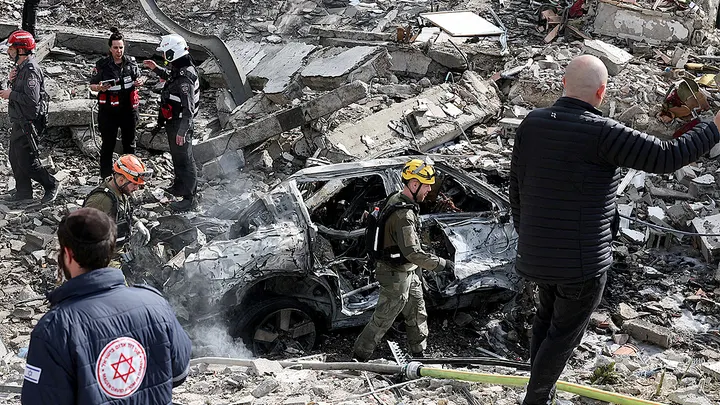
Iran launched missile and drone strikes in response to US Israeli military action known as Operation Epic Fury. According to reports, the attacks killed at least 11 Israeli civilians and injured dozens more.
In Tel Aviv alone, shrapnel damaged around 40 buildings. Officials confirmed at least one fatality caused by falling debris. The Philippine Embassy also reported that a Filipino national died in a strike on Saturday.
As tensions intensified, Israeli President Isaac Herzog visited one of the impact sites. He emphasized resilience while blaming the Iranian regime for destabilizing the region. Herzog said peace remains possible, but only if state sponsored aggression ends.
Regional Stakes and Political Fallout
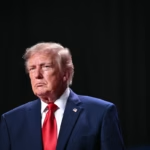
Michael argued that the outcome of the conflict will depend heavily on US leadership. He pointed to statements from Donald Trump indicating that operations will continue until objectives are met. According to Michael, decisions made in Washington could shape the Middle East for years.
Meanwhile, Iran moved quickly to stabilize its leadership structure. Authorities elevated figures including Alireza Arafi, Masoud Pezeshkian and Gholam-Hossein Mohseni-Eje’i into prominent roles.
Michael suggested Iran’s leadership transition exposed internal weaknesses. He said the country’s supreme leadership had not fully prepared for succession planning, which could create further instability.
A Region on Edge
For now, Tel Aviv remains under emergency conditions. Sirens continue. Shelters remain packed. Although Israeli defense systems intercept many incoming threats, the psychological toll grows heavier with each alert.
Michael believes Iran will struggle to recover from the combined military pressure and internal strain. At the same time, he warned that the coming days will prove decisive for the region’s future.