
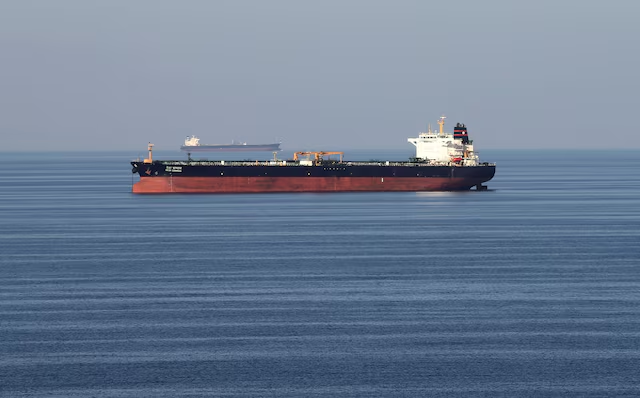
Iran has blacklisted 45 tankers over alleged violations of its rules for crossing the Strait of Hormuz. The vessels could face fines, detention and cargo confiscation, according to Iran’s Persian Gulf Strait Authority.
The warning also applies to ships that conduct ship to ship transfers with the listed vessels. The announcement comes as tensions between Iran and the United States continue to affect shipping through the strategic waterway.
Iran Blacklists 45 Strait Tankers
Iran has taken a new step against tanker operators using the Strait of Hormuz. The Persian Gulf Strait Authority said 45 vessels had violated Iranian rules for crossing the waterway.
The authority said the listed ships could face fines, detention and cargo confiscation.
Iran also warned other vessels against conducting ship to ship transfers with the blacklisted tankers. Authorities said those vessels could also face inclusion on the list.
The announcement comes days after the United States threatened Iran with tougher sanctions. Tehran has warned that it would respond strongly to further US pressure.
Quick Facts
| Detail | Information |
|---|---|
| What happened | Iran blacklisted 45 tankers and warned of possible fines, detention and cargo confiscation. |
| Where | Strait of Hormuz and the wider Gulf region |
| When | August 24, 2026 |
| Who is involved | Iran, international tanker operators, ADNOC Logistics and Shipping, Navig8 Tankers and Bahri |
| Current status | Iran has published a list of 45 vessels and provided a process for owners seeking removal from the list. |
| Why it matters | The Strait of Hormuz is a major route for global energy shipments, so restrictions could increase risks for shipping and oil markets. |
The Iranian list includes several types of commercial vessels. These include very large crude carriers, liquefied natural gas tankers, liquefied petroleum gas tankers and clean product vessels.
Several listed ships have links to major shipping and energy companies.
The companies connected to vessels on the list include ADNOC Logistics and Shipping, Navig8 Tankers and Saudi Arabia’s Bahri.
Ships linked to Klaveness Ship Management, Stolt Tankers and South Korea’s Sinokor also appear on the list.
Iran did not specify in the announcement which individual rules each vessel had violated.
The authority said shipowners can request removal from the non compliant list. They must submit an explanation and relevant information to Iranian maritime authorities.
List of 45 Blacklisted Tankers
| No. | Vessel Name | IMO Number |
|---|---|---|
| 1 | Kiku | 9329796 |
| 2 | Mubaraz | 9074626 |
| 3 | Minoan Pioneer | 9471630 |
| 4 | Hafeet | 9928009 |
| 5 | Al Rekayyat | 9397339 |
| 6 | Wedyan | 9524970 |
| 7 | Cyprus Prosperity | 9595216 |
| 8 | Al Rawdah | 9734513 |
| 9 | Rasheeda | 9443413 |
| 10 | Lebrethah | 9976927 |
| 11 | Lila Vadinar | 9324100 |
| 12 | Maha Roos | 9231004 |
| 13 | Gfs Galaxy | 9401271 |
| 14 | Al Bahyah | 9937799 |
| 15 | Mombasa B | 9739501 |
| 16 | Stolt Magnesium | 9739317 |
| 17 | Al Watan | 9615030 |
| 18 | Navig8 Messi | 9482859 |
| 19 | Singapore Prosperity | 9419967 |
| 20 | Disha | 9250713 |
| 21 | Gaslog Shanghai | 9600528 |
| 22 | Lubna | 9489065 |
| 23 | Hazi 1 | 7802598 |
| 24 | Ryujin | 8206818 |
| 25 | Anna Barbara | 9407500 |
| 26 | Sunbird Arrow | 9323821 |
| 27 | Minoan Dignity | 9294484 |
| 28 | Maria | 9917828 |
| 29 | Kavomaleas | 1042823 |
| 30 | Mardan | 9360453 |
| 31 | Sweden Prosperity | 9588392 |
| 32 | Jarnain | 9823546 |
| 33 | Kaifan | 9656046 |
| 34 | Nissos Kea | 9920758 |
| 35 | Rotterdam Energy | 9508859 |
| 36 | Al Hamra | 9074640 |
| 37 | Umm Al Ashtan | 9074652 |
| 38 | Marigold LNG | 9230062 |
| 39 | Banastar | 9228045 |
| 40 | Navara | 9241798 |
| 41 | Nissos Heraclea | 9419618 |
| 42 | Blue Star 1 | 9215115 |
| 43 | Ashley | 9258466 |
| 44 | Mraweh | 9074638 |
| 45 | Al Lulu | 9583627 |
Strait of Hormuz Faces Shipping Disruption
The Strait of Hormuz connects the Persian Gulf with the Gulf of Oman. It serves as a major route for oil and gas shipments from the Gulf region.
The current conflict has disrupted tanker traffic in the region. US coordinated efforts have helped some vessels move through the strait and transfer cargo to larger tankers waiting outside the waterway.
The Gulf region supplied about 20 percent of the world’s daily crude oil and liquefied natural gas before the conflict disrupted tanker movements.
How the Blacklist Could Affect Oil Markets
The new blacklist could increase uncertainty for shipping companies operating around the Strait of Hormuz.
Tanker owners may face additional checks, delays or financial risks if Iranian authorities enforce the new measures.
The situation could also affect energy markets. The Strait remains an important route for global oil and gas supplies, so any major disruption could put pressure on international energy prices.
The announcement also adds another point of tension between Iran and the United States at a time when both sides are already taking stronger positions.
What Happens After Iran’s Tanker Blacklist?
Iranian maritime authorities are expected to handle requests from shipowners seeking removal from the list.
The main question is how Iran will enforce the restrictions against the 45 vessels and whether additional ships will join the blacklist.
Shipping companies will also need to monitor Iranian requirements for transit and ship to ship transfers in the Gulf.
Any further restrictions on tanker movements could increase concerns about energy supplies and shipping costs.
The move increases pressure on international shipping at a critical energy route. The impact will depend on how Iran enforces the restrictions and whether more vessels face similar measures.